
Ein führender Hersteller von CNC-Maschinen, der Preise direkt ab Werk und ISO-zertifizierte Qualität bietet, unterstützt durch eine globale Präsenz in über 60 Ländern und eine lebenslange Verpflichtung zu unbegrenztem technischem Support.




Ein führender Hersteller von CNC-Maschinen, der Preise direkt ab Werk und ISO-zertifizierte Qualität bietet, unterstützt durch eine globale Präsenz in über 60 Ländern und eine lebenslange Verpflichtung zu unbegrenztem technischem Support.
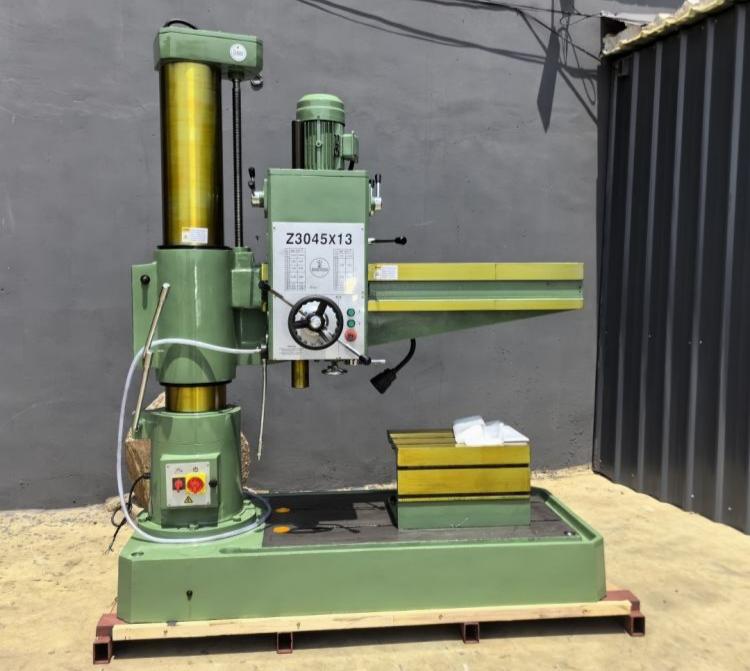
A Bohrmaschine ist eine der unverzichtbarsten Bearbeitungsmaschinen in Maschinenbaubetrieben. Ihre Hauptaufgabe ist die Herstellung runder Löcher in Werkstücken. Neben dem reinen Stanzen integriert sie zahlreiche praktische Hilfsfunktionen, um präzise, glatte und effiziente Ergebnisse zu gewährleisten. Dieser Artikel erläutert die wichtigsten Grundfunktionen der Stanzmaschine. Industriebohrmaschine für Anfänger, um die grundlegenden Bedienungsfunktionen schnell zu beherrschen.
1. Kernbohrmechanismus
1.1 Spindelrotation
Die Spindel klemmt den Bohrer ein und treibt ihn an. Die Drehzahl wird in Umdrehungen pro Minute (U/min) gemessen. Sie muss an das Werkstückmaterial angepasst werden: hohe Drehzahl für weiche Materialien wie Holz und Aluminium, niedrige Drehzahl für harte Stahlsorten. Die Drehzahlregelung erfolgt bei den meisten Geräten über einen Riemen oder ein Einstellrad.
1.2 Spindelvorschub
Der Vorschub bezeichnet die Abwärtsbewegung eines rotierenden Bohrers in das Material. Kleine Bohrmaschinen arbeiten mit manuellem Hebelvorschub, während große Maschinen mit automatischem Vorschub ausgestattet sind. Eine angemessene Vorschubgeschwindigkeit verhindert Bohrerbruch durch zu hohe Drehzahl und geringe Bearbeitungseffizienz durch zu niedrige Drehzahl.
1.3 Tiefensteuerung und Spindelhub
Ausgestattet mit einem Tiefenanschlag, fixiert die Maschine die Bohrtiefe und gewährleistet so eine gleichbleibende Tiefe mehrerer Bohrungen ohne wiederholtes Messen. Die Spindelaufnahme steuert den effektiven Vorschub des Bohrers (üblicher Vorschub: 10–15 cm). Für tiefere Bohrungen justieren Sie den Maschinenkopf oder den Arbeitstisch.
2. Werkstückfixierung und -positionierung
2.1 Tabellenanpassung
Der Arbeitstisch dient zur Aufnahme der Werkstücke und ermöglicht die Höhenverstellung; einige Modelle sind neigbar, um unterschiedlichen Bearbeitungsanforderungen gerecht zu werden. Bei Radialbohrmaschinen ist der Tisch üblicherweise fest montiert, und die Bohrposition wird durch Verschieben des Maschinenkopfes eingestellt.
2.2 Spannen und Werkstückaufnahme
Die sichere Fixierung der Werkstücke ist Voraussetzung für sicheres Bohren. Kleine Teile werden in einem Schraubstock eingespannt, große Werkstücke direkt auf dem Tisch. Die T-Nuten im Tisch sind mit Standardklemmen kompatibel und verhindern so ein Verrutschen der Werkstücke während der Bearbeitung.
3. Gängige Präzisionsbohrverfahren
3.1 Zentrierbohrung
Vor dem Bohren großer Löcher sollte ein kleines Zentrierbohrer vorgebohrt werden. Der kurze und starre Zentrierbohrer markiert eine Vertiefung, die ein Verrutschen des großen Bohrers verhindert und die Positionsgenauigkeit des Lochs verbessert.
3.2 Peck-Bohren
Ideal für die Tieflochbearbeitung. Der Bohrer bewegt sich wiederholt auf und ab, um die Späne aus dem Inneren abzuführen und so die durch Späneansammlung verursachte Überhitzung und den Bruch des Bohrers effektiv zu verhindern. Moderne Bohrmaschinen sind in der Regel mit automatischen Bohrzyklen ausgestattet.
3.3 Aufreiben
Der zweite Bearbeitungsprozess nach dem Bohren. Mit einer Reibahle wird eine geringe Menge Restmaterial an der Bohrlochwand entfernt, um die Oberflächenglätte und Maßgenauigkeit des Bohrlochs zu optimieren.
3.4 Klopfen
Wird zur Bearbeitung von Innengewinden verwendet. Die Maschine treibt den Gewindebohrer in das vorbereitete Loch, um das Gewinde zu schneiden, und kehrt die Drehrichtung automatisch um, um den Gewindebohrer wieder auszuführen. Dies ist effizienter als das manuelle Gewindeschneiden.
4. Lochformung und Oberflächenbearbeitung
5. Funktionen spezieller Bohrmaschinen
5.1 Gruppenbohrung
Ausgestattet mit mehreren parallelen Spindeln, können an jeder Spindel unterschiedliche Bohrer eingesetzt werden. Die Werkstücke werden zu verschiedenen Stationen transportiert, um mehrstufige Bohrungen durchzuführen. Dies eignet sich für die Serienbearbeitung von Teilen mit mehreren Bohrungen.
5.2 Radialbohren
Der schwenkbare mechanische Arm und der bewegliche Maschinenkopf machen das Umsetzen schwerer Werkstücke überflüssig. Der Bohrer kann beliebig positioniert werden und eignet sich somit auch für die Bearbeitung großer Werkstücke.
5.3 Empfindliches Bohren
Der Bediener erfasst den Schnittzustand über den Vorschubhebel, was für die Feinbearbeitung empfindlicher, winziger Bohrer von Vorteil ist, um die Bruchrate der Bohrer zu reduzieren.
Eine Nachricht hinterlassen
Scannen Sie den QR-Code zu WeChat/WhatsApp :